



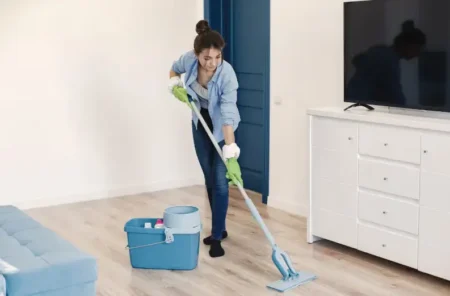
You mop the entire floor, wait for it to dry, and then notice cloudy marks, streaks, or footprints everywhere. Surprisingly, adding more cleaner and washing the floor again can make the problem even worse.
Streak-free floors usually require less cleaning product, clean water, the right mop, and a few simple changes to your technique. If your floors never look completely clean after mopping, these tricks can help.
1. Always Vacuum or Sweep Before Mopping
Never start with a wet mop on a dusty floor. Hair, crumbs, sand, and other debris mix with water and cleaning solution, creating dirty streaks that you simply move from one area to another. Vacuum or sweep the entire floor first, including corners and areas underneath furniture that you can easily reach. Pay extra attention to kitchens and entryways, where dirt tends to accumulate quickly. Removing dry debris first also prevents small particles from getting trapped in your mop and spreading across the rest of the room.
2. Stop Using So Much Floor Cleaner
More cleaning solution does not mean a cleaner floor. In fact, using too much product is one of the most common reasons floors look cloudy or streaky after mopping. Excess cleaner can leave a thin film behind after the water evaporates. That residue may also make the floor feel slightly sticky and cause new dirt to attach more easily. Follow the dilution instructions for your cleaning product rather than pouring an extra amount into the bucket. If you already have visible buildup, a pass with a clean damp mop may help remove leftover residue.
3. Use a Clean Microfiber Mop
A dirty mop cannot produce a clean floor. Microfiber works well because its fine fibers pick up dirt instead of simply pushing dirty water around. Start with a clean mop pad and rinse or replace it when it becomes visibly dirty. If you have a large home, keeping two or three clean microfiber pads nearby can make the job much easier. Wash reusable pads after cleaning, but avoid fabric softener because it can coat microfiber and reduce its performance. A fresh mop pad can make a surprisingly noticeable difference on glossy floors.
4. Change the Water Before It Looks Filthy
One bucket of water may not be enough for an entire home. Every time you rinse the mop, dust, grease, and dirt enter the bucket. Eventually, you start putting that dirty water straight back onto the floor. Change the water as soon as it becomes noticeably cloudy rather than waiting until you finish the entire room. For particularly dirty floors, you can also use a two-bucket approach: keep cleaning solution in one bucket and cleaner rinse water in another. The goal is simple — do not repeatedly wash the floor with the dirt you just removed.
5. Keep the Mop Damp, Not Soaking Wet
A floor does not need to swim in water to become clean. Wring out the mop thoroughly so it feels damp rather than dripping wet. Excess water takes longer to evaporate and can dry unevenly, making marks more noticeable. Too much moisture can also create problems for certain flooring materials, particularly wood and laminate. Work in manageable sections and avoid leaving puddles behind. Always follow the care instructions for your particular flooring because the amount of moisture it can safely handle varies by material and finish.
6. Try a Final Pass With Clean Water
If your floor looks clean while wet but develops a hazy film as it dries, cleaner residue may be the problem. Try going over the floor again with a clean microfiber mop that you have dampened with plain water, as long as the flooring manufacturer allows it. Use very little water and keep the mop clean throughout the process. This extra pass can help pick up residue left from an overly concentrated cleaning solution. If streaks repeatedly return, reduce the amount of cleaning product you use during future cleaning sessions.
7. Let the Floor Dry Before Walking on It
You can do everything correctly and still end up with visible footprints if people walk across the floor before it dries. Start cleaning at the farthest point in the room and gradually work toward the exit so you do not have to step over freshly cleaned areas. Open windows or improve air circulation when appropriate to help moisture evaporate. On glossy floors, you can also gently buff stubborn marks with a clean, dry microfiber cloth after the surface dries. This final step can remove light haze and give the floor a cleaner finish.
Be Careful With Vinegar and Other DIY Cleaning Hacks
Vinegar appears in countless homemade floor-cleaning recipes, but it is not suitable for every surface. Its acidity can cause problems with certain natural stone and floor finishes, while flooring manufacturers may recommend specific products for wood, laminate, or vinyl. The same caution applies to dish soap, bleach, waxes, oils, and other homemade mixtures. Before trying a viral cleaning hack, check the manufacturer’s instructions for your flooring. Using the correct product in a small amount is usually safer than experimenting with increasingly strong homemade solutions.
Final Thoughts
The secret to a streak-free floor is usually not stronger cleaner or harder scrubbing. Sweep or vacuum first, use a clean microfiber mop, measure your cleaning solution carefully, change dirty water, and avoid soaking the floor. If cloudy streaks keep appearing after the floor dries, try reducing the amount of product and removing existing residue with a clean damp mop. Sometimes using less really does leave the floor looking cleaner.
FAQ
Why does my floor have streaks after mopping?
Too much cleaning product is a common cause. Dirty mop water, a soiled mop pad, excessive moisture, and using a product that does not suit your flooring can also leave visible streaks or haze.
How do you mop a floor without leaving marks?
Vacuum first, use a clean microfiber mop, follow the cleaner’s dilution instructions, and keep the mop damp rather than soaking wet. Change dirty water during cleaning and let the floor dry completely before walking on it.
Should you rinse the floor with water after mopping?
It depends on the cleaner and flooring type. Some products do not require rinsing. However, if excess cleaner has left residue, a lightly dampened clean mop may help remove it when the flooring manufacturer’s care instructions allow this approach.
Why does my floor feel sticky after cleaning?
A sticky floor often indicates cleaning-product residue. Using too much detergent or repeatedly cleaning without removing existing buildup can leave a film behind. Reduce the amount of product and follow the manufacturer’s dilution instructions.
Picture Credit: Magnific