



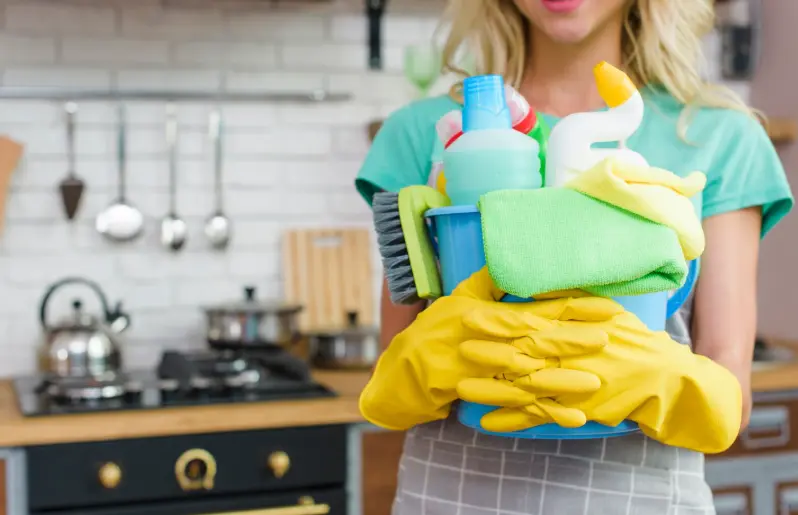
Most people don’t hate cleaning. They hate chaos. Jumping from room to room, starting everywhere and finishing nowhere, getting tired before anything actually looks better. That’s not a motivation problem. It’s an order problem.
Cleaning works when it follows logic. When each step makes the next one easier. Without that, effort gets wasted and the house still feels messy.
Start With Resetting Not Scrubbing
Before any real cleaning begins, the space needs a reset. That means removing what doesn’t belong. Dishes to the kitchen, clothes to the laundry, trash to the bin, random items back to their rooms.
If you start wiping surfaces while things are still everywhere, you’ll clean the same spot twice. Resetting clears visual noise and gives you room to work. It’s not cleaning yet. It’s preparation.
Always Clean Top To Bottom
Gravity decides the order, not preference. Dust, crumbs, water, and dirt fall downward. If you clean the floor first and shelves later, you create extra work for yourself.
Start with higher surfaces, shelves, mirrors, light fixtures, counters, then finish with floors. This way dirt only moves in one direction and gets handled once instead of chased around the room.
Dry Tasks Come Before Wet Ones
Dusting before wiping matters. Vacuuming before mopping matters.
Dry dirt turns into mud when it meets water. That makes surfaces harder to clean and leaves streaks. When you remove dust, hair, and crumbs first, wet cleaning becomes faster and more effective.
This order also protects surfaces from unnecessary wear.
One Room At A Time Beats Jumping Around
Cleaning feels endless when you move between rooms without finishing any of them. The brain doesn’t get closure, so fatigue hits faster.
Staying in one room until it’s done creates visible progress. That progress fuels momentum. Even if the whole house isn’t clean yet, one finished space already feels like a win.
Kitchens And Bathrooms Need Different Timing
Kitchens and bathrooms collect the most bacteria, grease, and moisture. They benefit from soaking time.
Spraying cleaner and immediately scrubbing wastes effort. Let products sit while you do something else in the same room. Grease and buildup break down on their own when given time.
This isn’t about stronger chemicals. It’s about patience working for you.
Floors Are Always Last
Floors collect everything that falls during cleaning. Dust, crumbs, hair, water.
Vacuuming or sweeping too early guarantees redoing it later. When all other surfaces are done, floors become the final reset that ties the room together.
Ending with floors also gives the strongest visual payoff, which helps the house feel fully clean instead of half-finished.
Deep Cleaning And Maintenance Are Not The Same
Trying to deep clean every time leads to burnout. Most cleaning should be maintenance, not perfection.
Maintenance keeps things from building up. Deep cleaning fixes what was ignored too long. Mixing the two makes cleaning feel heavy and endless.
When maintenance happens regularly, deep cleaning becomes occasional instead of overwhelming.
The Best Order Is The One You Repeat
There’s no perfect universal system. The right order is the one you’ll actually follow consistently.
If a routine feels too long, it will be skipped. If it feels logical and predictable, it sticks. Cleaning works best when it becomes automatic instead of emotional.
Consistency beats intensity every time.
Clean Spaces Are Built In Layers
A clean home isn’t created in one session. It’s built layer by layer. Resetting clutter, removing dust, wiping surfaces, cleaning floors. Each layer supports the next.
When you respect the order, cleaning stops feeling like a punishment and starts feeling controlled. The house responds faster. The effort feels lighter.
Order doesn’t make cleaning perfect. It makes it manageable.
Picture Credit: Freepik