



Most people don’t hate cleaning itself. They hate how long it takes. Hours disappear, energy drops, and the house still doesn’t feel truly clean. The problem usually isn’t laziness or lack of discipline. It’s the way cleaning is approached. When you clean without a system, you waste time moving things around, repeating the same actions and overthinking every step.
Efficient cleaning isn’t about speed. It’s about order.
Stop Cleaning Randomly
One of the biggest mistakes is jumping between rooms. You wipe the kitchen counter, then walk to the bedroom, then back to the bathroom. Your body moves more than your hands. That’s where time disappears.
A better approach is to clean in zones. You finish one space completely before moving to the next. Your brain stays focused. Your movement becomes intentional. Even though it feels slower at first, you finish much faster.
Decluttering Comes Before Cleaning
You can’t clean a surface that’s covered in stuff. Trying to do both at the same time doubles the work. Before you wipe, vacuum or mop, you clear. Just clearing. No deep thinking. No organizing perfectly.
Once surfaces are empty, cleaning becomes fast. One cloth. One motion. No obstacles. Most people spend more time moving objects than actually cleaning. Remove that step and everything speeds up.
Use Fewer Products, Not More
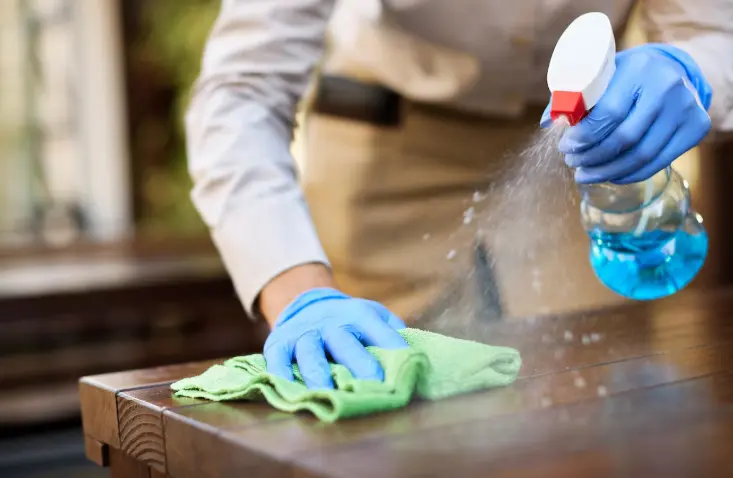
Too many sprays slow you down. You stop to choose, read labels, switch bottles. In reality, most surfaces don’t need special treatment. One good all-purpose cleaner handles the majority of tasks.
When products are simple, your movements become automatic. Spray. Wipe. Done. Less thinking means less time lost.
Clean Top to Bottom Every Time
Gravity always wins. Dust falls. Dirt drops. If you clean the floor first, you’ll have to do it again.
Start high. Shelves. Counters. Furniture. Finish with floors. This order prevents re-cleaning and saves more time than any “cleaning hack” you’ve seen online.
Set a Time Limit Instead of a Goal
Cleaning feels endless when there’s no boundary. Your brain stays tense because it doesn’t know when it can stop. Instead of aiming for “perfect,” aim for a fixed amount of time.
Thirty minutes of focused cleaning beats two hours of distracted effort. When the timer ends, you stop. This keeps cleaning from taking over your entire day and makes it easier to repeat regularly.
Daily Micro-Cleaning Saves Hours Later
Waiting until the house is a disaster guarantees long cleaning sessions. Small daily habits prevent buildup. A five-minute reset in the evening keeps mess from turning into a weekend project.
When you put things back immediately, wipe spills as they happen and reset main surfaces once a day, deep cleaning becomes rare. The house stays manageable instead of overwhelming.
Keep Tools Where You Use Them
Walking across the house to grab supplies wastes time. When basic tools live where they’re needed, cleaning becomes frictionless. A cloth under the sink. A vacuum that’s easy to access. A small trash bag nearby.
If tools are hard to reach, you subconsciously avoid cleaning. Convenience shapes behavior more than motivation ever will.
Lower Your “Perfect” Standard
A home doesn’t need to look staged to feel clean. Perfection is what makes cleaning exhausting. When you accept “clean enough,” you move faster and feel better.
A house is for living, not for inspection. When you stop chasing flawless results, cleaning becomes lighter and shorter.
Consistency Beats Marathon Cleaning
The secret isn’t effort. It’s rhythm. Short, regular cleaning sessions keep the house under control without stealing your energy.
When cleaning fits into your life instead of dominating it, you stop resenting it. The house stays clean, your time stays yours, and cleaning no longer feels like a full-time job.
Efficient cleaning isn’t about doing more.
It’s about doing less — but doing it smarter.
Picture Credit: Freepik